An enterprise is full of moments where information becomes a commitment: a price is set, a claim is accepted, a grant is prioritised, a patient is routed, a credit facility is approved or an intervention is triggered. Those moments may be distributed across applications, policies, spreadsheets, models, committees and individual judgement. The result is a large amount of decision logic without a shared way to describe it.
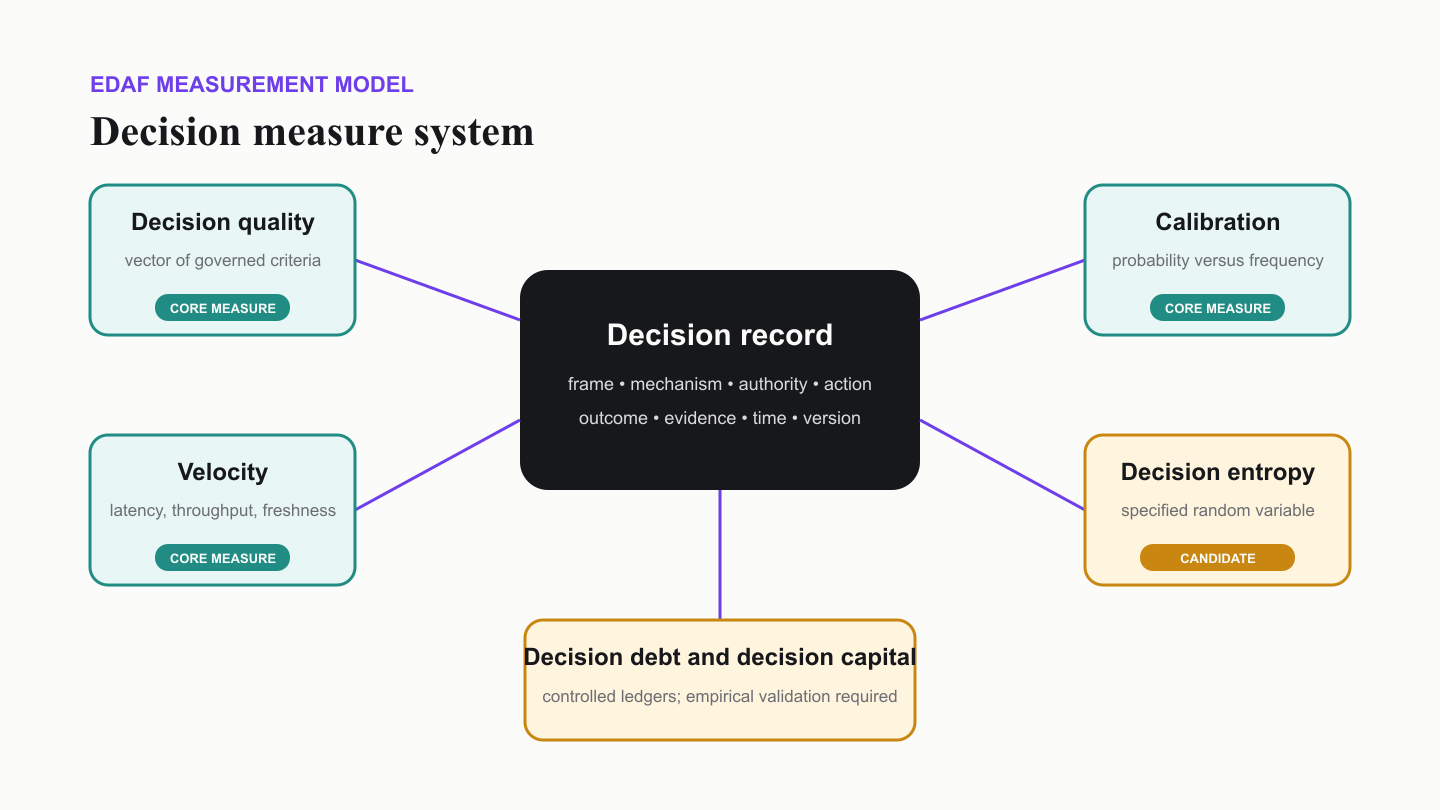
Enterprise Decision Management treats the decision itself as an asset. A material decision has a question it must resolve, an owner who is accountable for its purpose, a population or case to which it applies, inputs and evidence, policies and constraints, mechanisms for reaching a determination, an authority model, an action, an expected outcome and a record that allows the instance to be understood later. Versioning and measurement make change deliberate instead of accidental.
This does not mean moving every judgement into one central team or automating every decision. The discipline creates a common language and a set of controls so that people can decide with better evidence, software can execute repeatable logic consistently, and exceptions can reach the right reviewer with the right context. Automation becomes a choice made after the decision is understood, not a substitute for understanding it.